




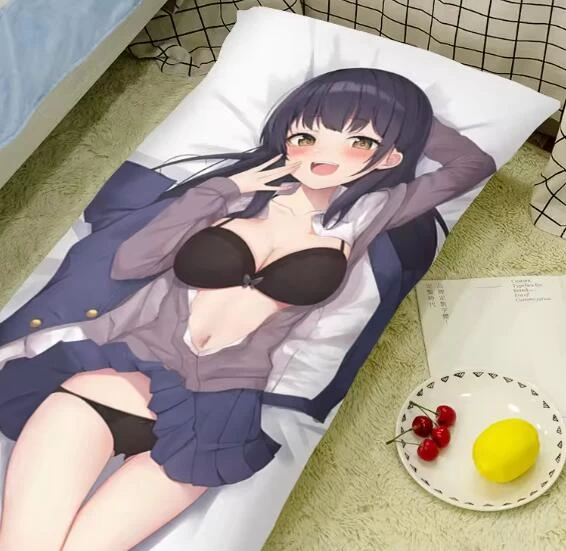
Hi, I’m Sakume – a girl who can’t fall asleep in London, Manchester or Glasgow without her anime body pillow.
If, like me, you cuddle your dakimakura (body pillow) every single night – sleep with it, watch anime with it, game with it – you’ve probably run into this annoying problem:
the surface of your pillow cover starts to go fuzzy and little fabric bobbles appear.
Your waifu’s artwork is still there, but:
- the fabric feels rougher,
- it looks a bit old and tired,
- and hugging it just isn’t as smooth and comforting as it used to be.
In this article, I want to share three things with you:
- Why anime body pillow covers start to pill and fuzz,
- how to “rescue” a cover once pilling has already appeared,
- how to care for it so the problem happens less often.
If you order your pillows from Sakume UK (dakimakuras.co.uk), you know we ship across the UK with EVRi, Royal Mail and China Post, usually delivering in 4–12 days (around 5 days for most orders). Every parcel arrives in discreet packaging – no product images or hints on the outside – and you can pay easily with PayPal, Credit Card, Google Pay or Apple Pay. So it’s worth learning how to keep your favourite dakimakura in good condition for as long as possible.
Why does it pill in the first place?
This is almost a “mandatory lesson” for any high‑contact fabric. Jumpers, hoodies, bedding – everything that spends lots of time against your skin will eventually show wear.
With a dakimakura, you just notice it more, because it’s your favourite character.
Friction is the number one culprit.
Think about the areas where you usually hold your pillow:
- where your head rests,
- the side you wrap your arms around in bed,
- that corner you absent‑mindedly rub while watching anime,
all of these spots experience constant rubbing. Fibres are twisted and pressed over and over, short fibre ends pop out and tangle into little balls.
Just like the elbows of a cashmere jumper – the closer the contact, the more likely you are to see those “marks”.
The fabric’s personality decides its lifespan.
At Sakume we often talk about Peach Skin and 2WAY / NEW 2WAY – the most common dakimakura fabrics.
- Cheap, low‑grade blends with short fibres and loose twist will start to fuzz after very little friction.
- High‑quality Peach Skin has a tight layer of fine short fibres on the surface, making it more durable.
- 2WAY and NEW 2WAY use high‑elastic, fine filament yarns with a denser knit and stronger fibre cohesion – with the same level of care, they resist pilling much better.
“One pound for one quality level” is really true for pillow materials.
Washing is the accelerator.
If you:
- throw the cover straight into the washing machine,
- wash it together with jeans, towels or fleece,
- use strong alkaline powders or bleach‑based detergents,
you open up and weaken the fibre surface, making pilling even worse.
To put it simply:
a certain amount of pilling on something you hug every day is normal wear and tear – it doesn’t mean the product is rubbish.
Only when fibres start shedding in chunks or the surface thins out very quickly is it a sign that the material or workmanship had serious issues from the start.
✂️ Already pilling? A tiered “rescue plan”
Don’t give up on your dakimakura just yet. Most bobbles can be removed gently.
Fabric shaver – first choice
At Sakume we’ve put together a pillow cleaning kit, but the core tool is the same as a good fabric / lint shaver.
- First, lay your waifu pillow cover flat.
- With one hand, gently pull the fabric sideways to make the bobbles stand up.
- With the other hand, move the shaver smoothly in one direction, following the pile.
For delicate fabrics like 2WAY / NEW 2WAY:
- test on a small, hidden area on the inside first,
- use a model with a protective mesh and adjustable height,
- avoid pressing too hard or going over the same spot repeatedly.
After shaving, use a lint roller across the whole cover to clear away all the tiny “bodies” of the removed bobbles.
Lint roller / tape – quick fix for light fuzz
If the surface just has a fuzzy layer from friction and hasn’t formed tight balls yet:
- use a tear‑off lint roller, or
- press wide tape gently onto the fabric and peel it off.
This is my go‑to method for removing pet hair and short loose fibres from my covers, especially in UK flats where cats and dogs love to jump on the bed.
Razor – an advanced, high‑risk option
A manual razor can remove bobbles, but it’s definitely “high‑risk”:
- you must keep the cover flat and slightly taut,
- shave gently in one direction only – never saw back and forth,
- ultra‑thin 2WAY / NEW 2WAY or detailed print areas can be damaged permanently by a single slip.
If you struggle to draw eyeliner straight, I’d suggest skipping this method entirely.
Needle comb for long‑pile covers
If you have a long‑pile plush cover printed with a long‑haired character, you’ll usually get tangles rather than little balls.
- Grab a fine pet slicker brush / needle comb,
- gently brush along the pile direction, focusing on knotted tips.
Loose fibres will come away naturally, and the fluff will stand up again – the pillow looks instantly fuller.
Aftercare: smoothing the fibres
Once the bobbles are gone, you can:
- lightly spray a gentle fabric care spray, or
- use a diluted fabric softener solution (light mist, then smooth with your hand),
to help the fibre surface lie flatter and reduce future tangling and pilling.
🛡️ Don’t want constant fixing? Prevention is easier than repair
Work these small habits into your daily routine and your dakimakura will stay with you much longer.
Washing: textbook gentle
Inside‑out + in a laundry bag:
Turn the cover inside out (print facing inward), fold it neatly and place it in a roomy, fine‑mesh laundry bag.
This absorbs a lot of the twisting and friction in the drum and is key to protecting the print and fibres.
Cool water, gentle cycle:
Use cool or 30°C water and choose a Delicate / Hand Wash / Gentle setting.
Hand‑washing is even better; just don’t scrub aggressively.
Neutral detergent is the baseline:
Avoid products with bleach or strong alkalis.
A little fabric softener can help make fibres smoother and reduce static and friction.
Dry flat in the shade:
Absolutely no direct sunbathing or hot tumble drying.
Lay the cover flat in a shaded, airy area. When it’s about 70–80% dry, gently pat it all over with your hands – the pile will fluff up again.
Everyday use: beware of unconscious habits
Jewellery and nails – hidden killers:
Your pillow “remembers” every touch from rings and metal bracelets – they snag fibres repeatedly.
Long nails and hangnails are also experts at pulling threads.
Before climbing into bed with your dakimakura, take off hard jewellery.
Give your pillow a “pyjama” layer:
Use a thin, smooth outer pillowcase over your dakimakura – something like Tencel or high‑thread‑count cotton.
Day‑to‑day, you mostly wash this outer layer, which protects the printed cover underneath.
No “massage” from pets:
Cats kneading or dogs scratching your pillow might look cute, but to delicate fabrics it’s instant damage.
Try to keep your treasured pillow a safe distance from claws.
Buying next time: choosing the right fabric
When you invest in your next pillow:
- read the fabric labels:
- prioritise 2WAY / NEW 2WAY (silky, elastic, less obvious pilling with proper care) and
- high‑quality Peach Skin (fine, durable “peachy” texture),
- check if the description mentions durability, print quality and pilling resistance.
Handle your dakimakura with a bit of extra care, and it’ll stay soft, clean and reassuring for many nights – whether you’re in a student room in Leeds or a house in the countryside.
The occasional little bobbles are like the fading on your favourite jeans: a record of the time you’ve spent together, not a reason to let go.